
Emerging Cockroach Research: What Every Homeowner and Pest Professional Should Know
Cockroaches have long been considered a staple pest for the professional pest control industry, but recent scientific advances reveal that there’s much more to these insects than meets the eye. New research is changing our understanding of cockroach related health risks, disease transmission, and even the way these pests are studied in laboratory settings. Here’s a look at the latest findings and their real-world implications for homes and businesses.
1. Cockroach Infestations and Indoor Air Quality
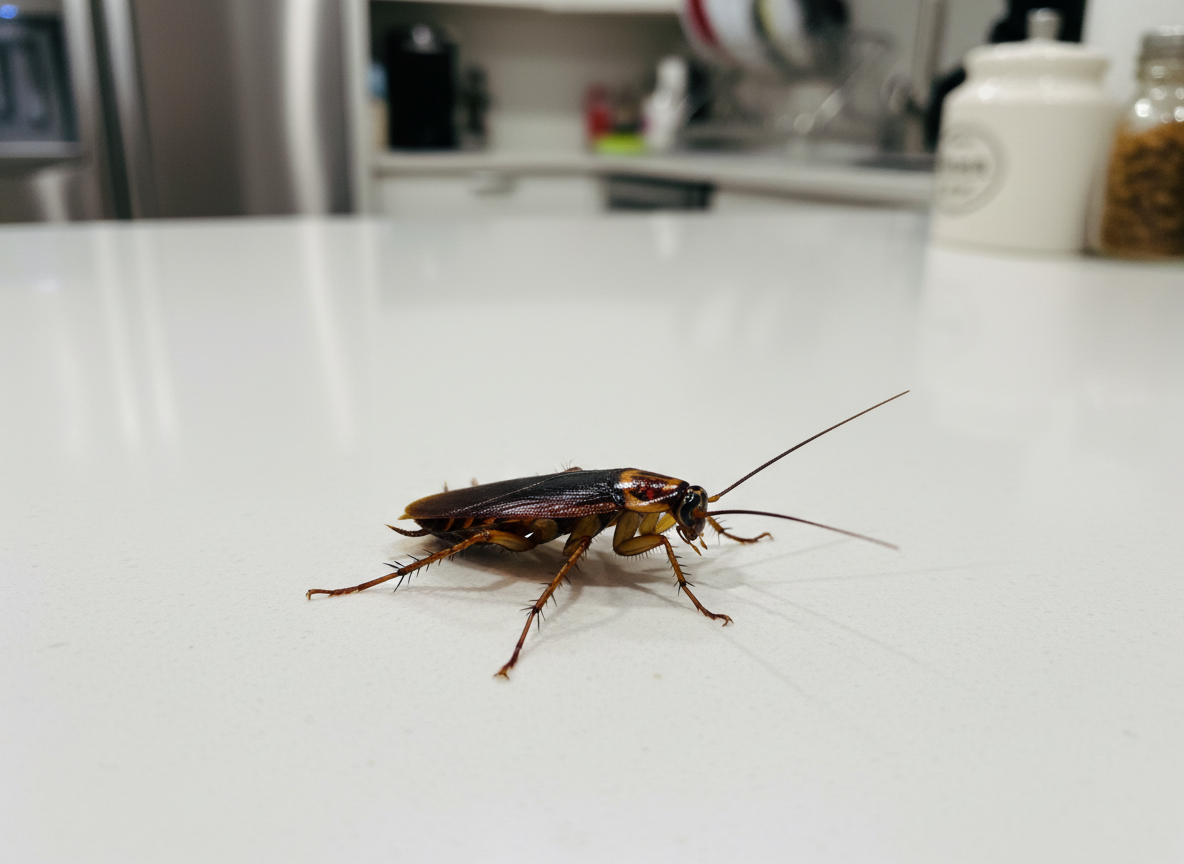
A recent study by North Carolina State University (NCSU) has established a direct link between residential cockroach infestations and elevated levels of indoor endotoxins, bacterial particles that can impact respiratory health. The research focused on German cockroaches (Blattella germanica) and found that the larger the infestation, the higher the concentration of these contaminants in both settled and airborne dust, with kitchens being particularly affected. Notably, female cockroaches contributed twice as much endotoxin as males due to higher food intake.
The study underscores that partial reduction of cockroach populations is not enough; complete removal is necessary to meaningfully lower allergen and endotoxin levels. Professional pest control interventions proved effective, with treated homes showing significant reductions in both cockroach numbers and associated contaminants. Read PMP’s summary on the NCSU endotoxin study The next step for researchers involves examining whether the co-exposure to both allergens and endotoxins makes asthma worse. For more on this study, visit JACI-global.org
2. Cockroaches as Active Disease Vectors
Groundbreaking research from Purdue University is challenging the traditional view of cockroaches as passive carriers of Salmonella. Dr. Jose Pietri’s team discovered that Salmonella bacteria can actually replicate within the cockroach gut, forming persistent populations. This not only increases the risk of transmission through cockroach feces in food preparation areas but also raises concerns about the potential for these bacteria to develop antimicrobial resistance (AMR) by exchanging genetic material with other gut microbes.
This emerging threat highlights the importance of targeted pest management in preventing the spread of hard-to-treat infections. Read PMP’s summary on Purdue’s salmonella research.
To read the full study details from Purdue University, visit: https://ag.purdue.edu/news/2025/07/studying-how-salmonella-hitches-a-ride-on-cockroaches.html
3. How Research Methods Influence Cockroach Behavior
A study from the University of Aberdeen has revealed that the way scientists track cockroach movement can significantly affect their behavior. Using AI analysis, researchers compared cockroaches fitted with RFID tags to those with visual marker tags. The latter group exhibited increased speed and activity, likely a stress response while RFID tags had no significant effect. This insight is crucial for interpreting future pest research and ensuring that findings reflect natural insect behavior. Read PMP’s summary on the University of Aberdeen tracking study The findings of this subsequent study, published in the January 2025 issue of the Journal of Insect Science, focused on a crucial detail for researchers: whether the physical tags used to track the insects influence their natural movement.
These new discoveries underscore the evolving complexity of cockroach management. For homeowners and pest professionals alike, staying informed on the latest science is key to protecting public health and ensuring the most effective pest control strategies. The Mosquito Assassin team is always learning, weather we are looking at the latest case studies on treatment protocols or the newest more effective equipment. We are always staying on top of the ever-changing pest extermination landscape.