


Rodent Warning Signs list
The Most Common Places Rodents Get In
Rodents don’t need an open door. They use gaps and construction openings that go unnoticed.
Garage door corners and weather stripping gaps
Door sweeps and thresholds
Utility penetrations (AC lines, cable, plumbing)
Foundation cracks and siding transitions
Dryer vents and damaged screens
Soffits, fascia returns, and roofline gaps
Deck-to-house connections and low-entry points
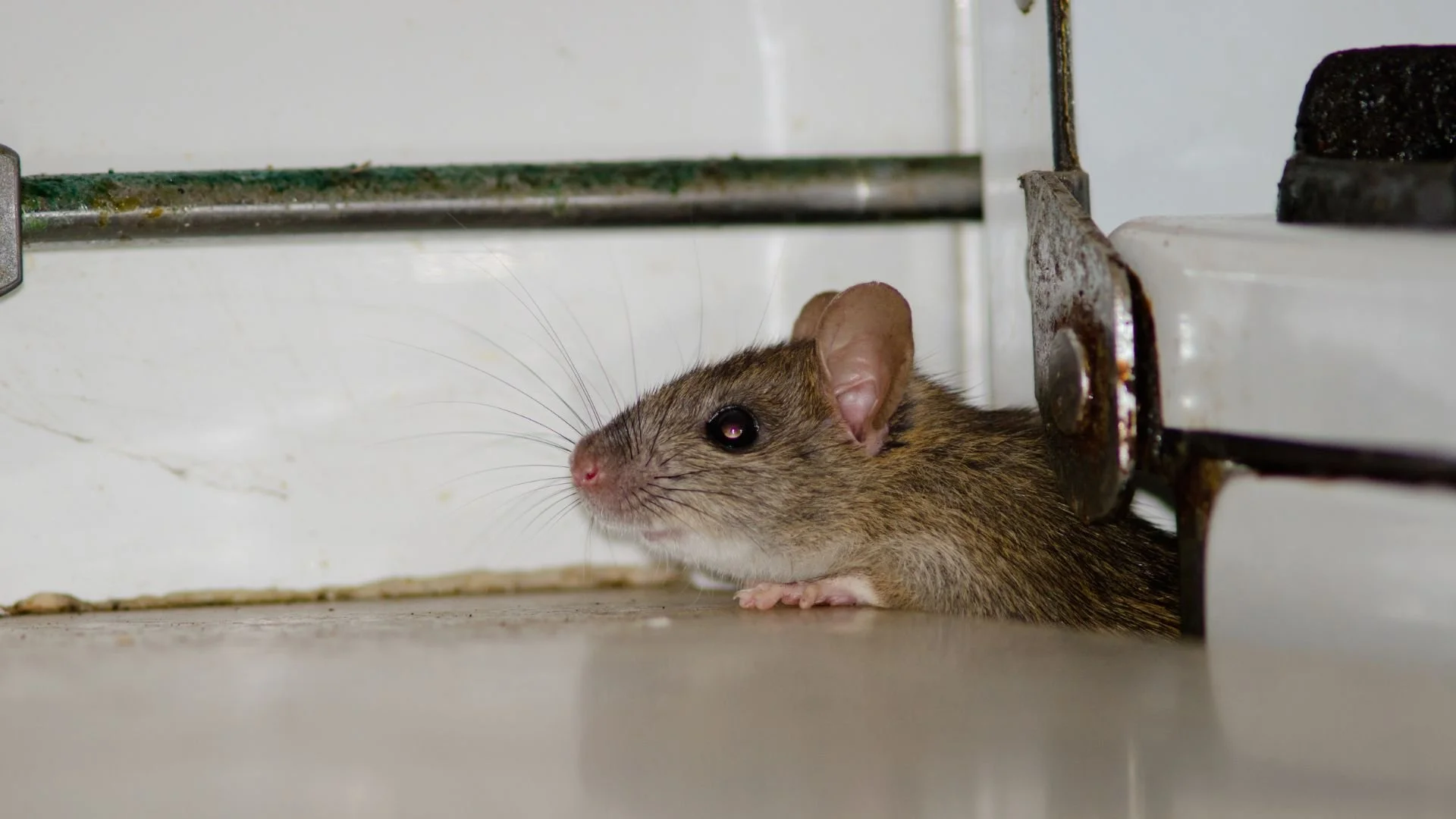
The 12 Rodent Warning Signs
If you notice one of these, don’t assume it’s “nothing.” Rodent activity usually builds quietly.
1) Scratching or movement sounds
Most common at night. Listen near walls, ceilings, attics, or behind appliances.
2) Droppings
Found along baseboards, in cabinets, behind stored items, near garage corners, or around food storage.
3) Gnaw marks
Chewing on cardboard, plastic bins, wood, or wiring insulation. This is not random — it’s constant behavior.
4) Grease rub marks
Dark smudges along walls, pipes, rafters, or entry points from repeated travel.
5) Musky odor
A strong ammonia-like smell can indicate urine, nesting, or heavy activity.
6) Shredded nesting material
Insulation, paper, fabric, packaging, or stored items torn up and piled.
7) Pet behavior changes
Dogs and cats sniffing, pawing, staring at walls, or tracking a specific area repeatedly.
8) Food packaging damage
Small tears, chew holes, or scattered crumbs in pantry areas, garages, or storage rooms.
9) Tracks or footprints
Dusty surfaces may show tiny footprints or tail drag lines (attics, basements, top of appliances).
10) Burrows or disturbed soil
Small holes near foundations, patios, decks, sheds, or landscape edges.
11) Unexplained power issues
Flickering, tripped breakers, or “mystery outages” can be related to chewed wiring.
12) Repeat sightings
Seeing a mouse/rat more than once usually means there’s established activity and access.
What To Do If You Suspect Rodents
Step 1: Don’t seal everything immediately
Sealing without confirming activity can trap rodents inside and make the problem worse.
Step 2: Reduce attractants
Secure food, clean up crumbs/grease, manage pet food, reduce clutter, and improve storage.
Step 3: Get an inspection that identifies the source
The goal is to find entry points and activity zones, then treat and prevent repeat issues.
Why Early Action Matters
Rodent activity can lead to:
Contamination in kitchens, storage areas, and insulation
Odors and staining
Damage to stored goods
Chewed wiring and costly repairs
Increased fire risk
Frequently Asked Questions
How small of a gap can a mouse fit through?
If a gap is about the width of a pencil, it’s worth checking and addressing.
Can I solve this with traps alone?
Traps may reduce visible activity, but repeat problems usually mean access points are still open.
Do you work with property managers and commercial facilities?
Yes. We provide clear documentation and recommendations to reduce repeat issues and complaints.
What areas do you service?
Erie County PA, Crawford County PA, and Ashtabula County OH.